Showing posts with label Bamboo. Show all posts

Wednesday, October 12, 2016

Symbiosis and Grace: A tale of two fly rods.


2 DaVinci rods top. Bottom Para 15. Writer's log and pen while writing this mess.


Author’s note:

 
This is an essay based on reflections. Essentially, it is what might be considered a rod ‘Shoot-out’ in the modern slang, but nobody gets injured, and there is no violence. It is an examination of character and personality of inanimate objects with some allegory, analogies, and hints of anthropomorphism thrown in for clarification or explanation, or even accidental obfuscation. My approach to this and writing style is not common and may be considered enigmatic. I certainly hope so, for thought is not always linear, and writing should not always be either. The style might be read a bit like interrupted poetic prose spattered with philosophy and nonsense randomly but with intent and design not unlike a Jackson Pollack painting. Sometimes it might seem that I am searching for something without putting my fingers on it, only to have an epiphany a few paragraphs later, and detour yet again. Sometimes I wonder what people must think when they attempt to get through these little diversions of mine, but then I might deem it the highest compliment and praise if someone reads this and it spurs thought…. For thought is what I am after…after all….


These reflections were written at local parks while casting and taking notes and day-dreaming, a process I referred to once in an essay as ‘Water-Putting’. I would hike 4 miles, then go the quietest location I could find, set up the rods and begin taking endless notes and exploring ideas while casting. I hope you enjoy it!


The two fly rods explained


Both fly rods are 2 piece, 8 feet long, and take a 5 weight line. That is where the similarities end, for they are as different as air and water. Both rods were built and ‘interpreted’ by Joe Balestrieri, the cane whisperer and bamboo rod builder at Redwing Fly Rods, and a great friend. I acquired both rods this year, after having hand-built a leather rod tube to accommodate them, and purchasing a rare pre-war Hardy Perfect reel with an ‘agate-up’ line guard to balance the rods. I even made a leather reel case for the Hardy as well, long before either rod was a reality. Either a lot of thought and planning went into this, or a bit of insanity….. most likely both.

 
The rods are a DaVinci, and a Young Parabolic 15. Here are their histories.

 
The DaVinci, or the ‘Symbiosis’ of the title is a fusion of bamboo and graphite. Following the designs of Charles Ritz of the Vario-Power series of rod which married a bamboo tip to a fiberglass butt, Pezon & Michel of France built a rod with a cane butt section and a graphite tip in 1990 to 1991. The fact that little is known about this rod has little to do with performance, only with popularity, or a lack of it and a corresponding lack of understanding. It may have been a little too much of a diversion for the average angler, too much to chew on, and not understood at all, or the concept of fusion itself may have been seen as heretical. More on that later… Joe also leant me his personal DaVinci rod he built so that I could test cast and fish with it. It is a nine-foot for a six-weight line, and appears in the photo as the rod with the skeletal grip, another idea borrowed from the late Paul Young, the expansive idea-chaser and bamboo rod builder from Detroit Michigan. Balestrieri also used a modified Ritz grip on the rod in addition to the skeletal reel seat, blending the best of borrowed ideas and mixing them together to make a different flavor of rod. Sometimes the best tasting pasta dishes are assembled by scratch, and with only ingredients on-hand and in the mind, as I found out when Balestrieri cooked me a Sicilian bacon, white sauce and asparagus dish when I picked up the rod. He pulled that dish out and improvised. It was divine!


Since I mentioned Paul Young, the second rod is one I wanted Balestrieri to make for me. I wanted an all-around trout rod of around eight feet or so and for a five-weight line. What he came up with was a lightened Paul Young Para 15 taper. Instead of casting a six-weight line, as the original rods did, this one cast a true five beautifully. The name ‘Para 15’ comes from the ferrule being 15/64th in diameter. Para is short for ‘Parabolic’, which is fly-rod gibberish to attempt to explain a taper that bends mostly nearer the grip, and often has a stiffer tip. Parabolic rods thus are ‘regressive’ in taper, as they stand convention on its head by bending far down the blank. The most parabolic of the parabolics, rods like the Para 15 and the Princess, also by Paul Young, have a fluid slow action that flings the line out there without effort much like a slingshot.

Ernest Schwiebert, in his book Trout Tackle 2 told us that Young preferred his Para 15, and that perhaps it was Young’s favorite rod. Schwiebert himself commented that the Para 15 was “Perhaps the finest all-around trout rod in my collection.” That says a lot as Schwiebert owned countless bamboo rods from all the great makers, and fished them all over the world, and wrote about them as well in his stories and his histories of tackle and technique.

 
The rod Balestrieri built for me is similar to a lightened regressive taper Para 15 Young called the ‘Keller’. This rod is the ‘Grace’ in the title.


Before I break out the bottle of wine and begin waxing poetic, these two rods are perhaps the finest casting fly-rods I have ever had the privilege to hold or own, but for very different reasons; thus the point of the explorative reflections.


Getting to know you…


DaVinci, as in the great Leonardo, was the great historic artist he is considered both because of his divine talent and exquisite beauty of touch in capturing the human figure, as well as his diversity in designing and drafting war machines, civil engineering tools, castle and town layouts and defenses, etc. His explorations were incredible. His sketches are exquisite in their subtle strokes and detail, and almost casual in their greatness. They leave the average artist dumbfounded.

 
 The rod named after him may have had its name taken as a tribute to the fusion of the classical paintings and the drafting drawings. At least it would be nice to believe so. I use the term symbiosis to describe the rod as in two parts working together to achieve what each by themselves, could not achieve alone. For no two materials anchor the far bookends of opinion, puritanism, zeal and stubbornness in fly rod design and casting; bamboo of lore, and graphite of pure energy. One made of natural fibers bending in the wind, and one mastered by man and melded by alchemists out of carbon; Each material having supporters scoffing at each other. Bamboo fanatics will never admit that graphite is a viable material at all, and often call rods made of carbon fiber ‘Plastic’ just to raise a hackle or two. Graphite proponents call cane rods ‘Buggy-whips’ and dismiss cane as short-distance over-priced affectations. Cane nuts have started internet forums where they endlessly argue about nuances so obscure that to the layperson who wanders by and innocently trespasses on their lofty comfort and security with a perceived blasphemy of a question, they must seem like a bunch of model-railroad fanatics involved in a street fight to settle the issue of which gauge track is better.

 
These two sides are so polarized around performance versus classicism, that when some eccentric artist or craftsman one day makes a rod of both materials combined it must cause silence, and then cries of anger and blasphemy. How dare you disgrace cane with graphite you heretic. Heresy! How dare you mess up my graphite power tool with the addition of that dumb wood butt-section? Now it weighs 1/32nd of an ounce more and I can’t cast. So erupted the Capulets and the Montagues, yet Romeo and Juliet lay still bound together in brash reality right there in front of us. And they loved…. They loved without prejudice. They loved completely, with all of themselves.

 
So the DaVinci may never be accepted. Its dichotomy is too extreme. It angers the purists, and adulterates the puritan. The Capulets and Montagues war and rage and argue and fight… The experts will tell you that any fly- rod like this will be a disaster….

 
Until you cast it. Then the true duet begins, like a love song from West-Side Story, Bernstein’s brilliant adaptation of Shakespeare’s play… Romeo and Juliet in the modern age. These materials compliment each other amazingly. The cane butt pulls the weight closer to the grip, causing the rod to feel lighter in hand and more responsive. The cane bends near the butt, causing the rod action to be very powerful but semi-parabolic in nature. The graphite tip on my rod is longer than the butt section, and creates a unique property of a lack of deflection. Therefore, the best of two materials come together. The graphite tip is also lighter, reducing the overall weight of the flyrod, and preventing what often happens in bamboo rods; the tips become too heavy, especially in weights over 5 or lengths over 8 feet.

 
It took no time at all to understand this rod. Step up to the plate and swing. She takes all you can give as long as you are smooth. It is not a close distance rod, instead it wants some gas. I first fished it on a small spring creek where I was hampered by brush, and the rod did not like it. I caught fish, but I continually had to make the rod do things it didn’t want to do. Under 20 feet it didn’t want to load right, but when moving to a larger body of water it ran free. This rod does not want to be confined. With a cigar grip, a unique burned cork butt, and bright red wraps, it stands out as the convertible sports car in a field of sedans.

 
Only once, did I really step on the gas and run it full out, and the entire fly line went out and the backing banged the reel. Yet… it didn’t sell. Nobody understands it. Sad. Blasphemy! Heretic! Or… symbiosis? Just ask Romeo and Juliet! On second thought, don’t do that, it kind of ended badly for them. Perhaps peanut butter and jelly might be a better analogy. Yet… of Shakespeare’s plays, what is the most popular? Yes. The dichotomy.

 
I taught a fly-casting class for a Trout Unlimited chapter this summer using the DaVinci rod, and although everyone seemed to think it was interesting, watching people look at the rod and wiggle it was not unlike the tale of the three blind men trying to describe an elephant. If I hadn’t owned it and cast it, I would be in the same boat. One guy asked, “Why did you bring that rod?” I thought… “Why not?”. Sometimes it seems to be my place on earth to be the odd one who makes us all question things by doing everything contrary to conventional wisdom, and making it work.


Unlike the DaVinci, the Para 15 is a difficult gal to figure out. She is the demure one seated alone on the settee at the dance. She is not the most desirable or flashy of the girls, she has an understated quiet grace, part Greek with a quiet smile and classic cupid lips, but if you want to take the time to know her, she is the keeper, and the one you want to spend the rest of the night dancing with. Just don’t step on her toes… she hates that. Grace is demanding of respect. She is complicated despite being straightforward. She seems quirky at first. If you cast her right with smooth movements, she rewards you with an elegant loop and bend like lips slowly curving into a beguiling smile.

 
Parabolic rods are like this. You may hate the rod one second because you are pushing it too hard, and then the next second, when you smooth out your stroke and come into agreement with the rod, it rewards you. There is no wiggle-room in this rod. Either you are going to play beautiful music together, or you are going to make one god-awful racket and end up on the floor frustrated and tangled up in your own underwear. The rod sets the tempo, not you. Unlike some graphite rods that you can push, mold, and change to your ways, this Para 15 will not budge. So… after getting over a few tailing-loops and some frustrated casting, I closed my eyes and cast. I was not leading the dance, the rod was, and I opened my eyes to an epiphany. I felt it first in my arm and hand as the bend of the rod came alive so very subtly, and then witnessed the loop as 50 feet of line gracefully uncoiled and the reel quacked out a few more inches in protest. I cast it again with the maker, and while talking to him and not paying attention to my casting stroke, he said, “That was a perfect cast!” I had taken myself out of it, at least my conscious mind, and let my soul or unconscious take control. Joe laughed, and I did too. This Para 15 wanted no part of my thoughts, it only wanted what it’s soul’s essence desired. Pure smooth strokes. Don’t think, just feel….

 
This quirkiness is why some people never like parabolic rods. If you have an inflexible casting stroke and cadence, and you perform a tango even when the dance is a waltz, the rod will not make the adaptation, and will punish you. This ability to get to know the personalities of unique rods fascinates me. The changes I have to make as a caster in order to make the rod perform allow me to become a better caster because I am listening, not doing the talking.


The Para 15 requires patience. The style of casting that just seemed to gel includes a bit of Charles Ritz in his High Speed-High Line approach along with a smooth long travel on the back cast starting low with the tip to the ground, then smoothly accelerating forward and stopping however gently before lowering the tip. A powerful stop to create a tight loop made the rod do strange things, and I had to let it be in charge again before I understood again that it demands smoothness. Any noise or abrupt movements will shock it and it will stop singing for you. It took some time before I got to really understand the Para 15 since the flaws in casting came not from the rod, but from me.


This rod will perform up close and at distance, so it is more versatile than the DaVinci, and it might be hard to scratch together an argument against it as the finest all-around trout rod ever. I still struggle at distance with the rod though, but only in park-casting distances, because despite all the tales of 90 foot casts, for most situations a 60 foot cast is quite far, and a more realistic average distance on big water might be 50 feet, and the Para 15 is dead on at 40 and 50 feet, repeatedly hitting the same leaf at distance while simulating dry-fly accuracy. However, like most of us, one man’s meat is another’s poison, and after trying an overly heavy old double taper line on the rod, I put on a weight-forward 5 weight line and the rod sang an aria of its own. That is another important aspect to fly-rods. There is no such thing as the right line out of the box. I have rods rated for a seven that I cast with a six, and rods rated for a 4 that I cast with a five. Another caster might like the exact opposite. Balestrieri and I fooled around with one of his finest rod creations several times in succession with different lines often getting wildly different results before he grabbed a silk line that was actually a bit heavy, and after my prediction that it would only make it more confusing, the line flew out and hit the junipers at the edge of his property. We just looked at each other and smiled.

 
We have to give the rods different foods, if you will, and see how they react. A casting stroke more powerful might mean a lighter line or not. I tested or ‘fed’ my rods a variety of lines, many no longer in production.

 
Like my analogy to the dark brunette Greek and Italian classic like Cecilia Bartoli the opera mezzo-soprano, the Para 15 has a quiet and subtle beauty. It has a cork reel seat, not a deep polished wood. This is in keeping with the rods of Paul Young who was known to be a bit of a nut on saving weight and often sacrificing aesthetics in favor of performance. So this rod has no fancy ball gown, only an Italian green silk wrap. It is simple like an Italian feast of grapes, bread and wine taken in a Sicilian field in the hills and true to the roots and character of the maker Balestrieri.


The differences in these two rods always lead my mind to stray to music again. If these two rods were performing artists, how would they differ? Why, with as much character difference as they do in casting. Vladimir Horowitz the fiery Russian pianist would love to pound the keyboard of the DaVinci, while he would probably break the Para 15. Alfred Cortot, the poetic interpreter of Chopin and Debussy would love the complicated and quiet intricate rhythms of the Para 15, while he might find the DaVinci to be too brutal to make music.


I was doing research the other day for this article and became fascinated with bamboo collectors use of the term ‘Experimental’. The term was used to describe the DaVinci, as well as Paul Young’s rare but vaunted Princess, a regressive 7 foot for a 4 weight line of which very few were built. Critics seemed to imply that a taper that was not popular or of which few were made constituted an ‘Experiment’ in a connoted derogatory sense. Apparently, experiments that sold were acts of genius in contrast. Certainly the Princess and the DaVinci ideas were not failures due to their lack of casting brilliance, but perhaps the deviations of these rods might make us read the ‘Experimental’ critique as better defined as “I don’t get it….” That led me to include the CD cover for Carl Orff’s Carmina Burana, songs so beautiful and full of life yet profane, as a part of the montage photo heading this piece of experimental prose and fly-rod reflection. I thought it fitting, and I wanted to thumb my nose at convention, especially by those that collect rods and argue about them, but when it comes down to it, have no clue where the rod’s soul lies.

 
The soul comment leads me back to the more mundane word ‘Character’, and why I wrote this piece in the first place. I have cast some poor rods in my time, but more often than not, a decent rod with thought behind the taper and intent and purpose behind the design that at first might not speak to me will often reveal itself when I am not trying or thinking. That is why I built the Romeo and Juliet analogy and “Getting to know you…”.  One has to spend some time with a fly-rod in order to find out what makes it tick…. Far more than is given in any magazine “Rod shoot-out” I have ever read.


Conclusion ad nauseam…


So the Para 15 is the finest rod I have ever cast…. Or is it the Da Vinci? Both? Neither? Or is the point of ever trying to assign a score to a delicate object like a fine cane rod like trying to rank the finest painters and musical artists in a list….? An impossible task, and one that is perpetrated every day. Instead, art history teaches us that comparison and contrast is an exercise in itself. Not pointless, but leading to thought and more respect and a deeper appreciation of the intent of the object itself.


On the other hand, we could just go out and catch a bunch of fish. I like to think it can be more than just that…. It can be art if we let it be. Casting and rods can be like the fine instruments and music they were intended as. Just add a glass of fine claret, turn down the music, pick up a fly-rod and close your eyes.


Monday, November 23, 2015

The enigma rod

Fritz Schreck 8' 1" 6 wt rod and old Hardy reel with Irish salmon doubles


Part One, the Phoenix rising


“I have a rod for you…”

Thus it began the night before I was to drive up to the Bois Brule’ river in the pine and birch forests of Lake Superior to fish for steelhead. Packing and final preparations such as shopping for supplies and groceries would have to wait. I got a call at work from friend and bamboo rod guru Joe Balestrieri, and when he found out that I was driving to the Brule’, he uttered those prophetic words.


Dusk found me at his home, where he awaited with the rod and a reel spooled with a flyline. “I think you may like it, and nobody can appreciate it anyway, so I want it to go to a good home,” he said as he was taking it out of its green bag and putting it together. “Fish it.” “It might break, I dunno… It’s a Swiss Schreck 8 foot 1 inch.” “What….Who?” I thought. “Schreck? Geez, that means ‘Horror’ in German.”

He cast it effortlessly and handed it to me. “I think she is a 6/7,” he stated while sipping what he referred to as a Finnish Martini (Vodka and apple-juice). I picked up the rod and easily threw a tight loop of line 50 feet. I was surprised and shocked at how easy it was to cast a graceful loop with this rod. I pulled out more line and cast a tight 60 feet and the line cranked the reel at the end. “What the hell?” I stated out loud. “Did you tweak this rod?” “What the hell is this… What did…. How?” He was chuckling as we hurried to the safety of his den as it began drizzling. After a few glasses of his Spey-Side single malt that had more peat taste than bog-water, and long conversations on hand-made musky plugs, fly rods, angling, theory, art, aesthetics, literature and what-not, he bade me farewell to the Brule’ and I went on my way home with the windows open to hopefully dissipate the bog-smell from my person.

What was this rod?

It took awhile and a bit of searching before I could put together a provenance. Balestrieri had received the rod as part of some vague trade/acquisition involving a reel from some guy in Italy. The rod was made by a Swiss rod maker named Fritz Schreck, who, according to Rolf Baginski’s book on European bamboo, was a self-taught craftsman with quite a loyal following in Europe itself. He made rods under the ‘Kingfisher’ logo, and was noted for his taper design by trial and error, and for his eccentric way of using only the power-fibers of the cane, and assembling as many as 36 strips to make each section, instead of the common six strip method. Balestrieri had found some Swedish maple burl for a reel seat, and used it to compliment the odd but lustrous way each of the 36 pieces were flamed a different shade in the heat-treating process, making for long running lines of intricate blending of chocolates, coffees and caramels. He described the state of the rod to me as “A tomato-stake” when he got it. The reel seat and cork were past dereliction and some of the splices in the rod needed fixing.

Here was something new to me, and fascinating. A little-known rod-maker hardly seen or represented in America had crafted this fine instrument, and it had traveled from Italy to Balestrieri, who lovingly restored it, offered it for sale, and since nobody seemed to want it, sold it to me. It was back from the dead, complete with new rich brown silk wraps and a new bigger stripping guide, and destined to make music again on the water.

I placed it in my car in the morning, paired with a hangover and a Hardy Bougle’ mk IV 3 ½” reel. This was the “Use the good China” reel I had written about 7 years earlier after I found it in my reel bag nearly un-fished after I almost dinged it on a boat frame once. It was too valuable to fish… Then I was listening to a radio story where a woman was telling the tale of her mother’s good china which she had found preserved and safely put away after her passing, and decided to actually use it, unlike her mother. “Use the good China” became a symbolic phrase for sucking the marrow out of life, for using the good reel, and not collecting things to be used only once or twice on special occasions, but to brighten our every day lives with their use. So the Phoenix rod, back from the graveyard of an Italian closet buried under old shoes and the “Use the Good China” reel would be paired up. “Fitting,” I thought to myself as I arranged all the clutter of the trip in the trunk and back seat of the Volkswagen.

Part 2, the Phoenix fishing
On the Brule'


There would be no prettier place anywhere where I would go to baptize this new rod than ‘The river of presidents’. The lower Brule snakes its way through a canyon filled with a wild forest, grouse, and wolves. Their howling can accompany one through the woods on a late-exit from the river. On the drive up, I spotted a bull moose in a swampy field filled with cranberry bogs and springs feeding multiple river systems. A good omen, and a rare sight for Wisconsin.

I was alone on day one, for my friend was not to arrive until the following afternoon. I slept in the car that night, the cries of distant wolves haunting my sleep. The next morning broke bright and sunny, and I headed upriver to a smaller and narrower reach of the Brule’ and assembled the rod, geared up, and got on the water. Here I was, fishing the Schreck, and clearly completely out of my mind. There were somewhere in the river, steelhead pushing 30”, and I was using an 8’ 1” restored tomato stake and a reel with almost no drag at all. “Well, Carpe Diem damn it!” I thought aloud.

The rod performed flawlessly, especially with over-head casting. It threw without any difficulty a 7’ sink tip with a large green-butt skunk tied spey-style. It could perform spey-casts too, although it got tricky with a rod that short and a sink-tip and large fly. The rod and I got to know each other that day. I slowed down a bit in my casting, became smoother. I began to bond with the rod. I sat on a rock and looked at it in the bright sun. Not a gaudy rod, but rich with somber hues of memorable scotches and morning teas. A rod built for a purpose. Sea trout? Grayling? A workhorse. It did everything I asked of it within reason, like a fine shotgun that just mounts to your shoulder and swings like an old friend. Pick up the line.. backcast… put it down… and the rod was accurate as an arrow too!

Last year our little crew was visiting with two young fishermen from Minnesota late at night in the motel parking lot, when after enough lubrication for the tongue and 3 days fishless one of them solemnly brought forth the following phrase, “The Brule’ is beautiful, but she is a cruel woman.” This could sum up all my trips here for steelhead, where a swung fly, despite all the beautiful water, just has a hard time connecting with the fish, despite my long steelhead experience, or those of friends who she has enticed to her waters and dismissed with a turn of face and a wry smile. However, I would be guilty of sacrilege worthy of being tarred and feathered if I were to fish a nymph or pink plastic worm thrown with a bobber and split shot on that holy place, or with the new rod. We left after 3 days of hard fishing, knowing the river a good deal better, including why not to follow me when I think I find a deer trail, and having a wonderful time altogether…albeit fishless.

Part 3, Back on home waters…

Storms followed me back from the Brule’ the whole way, and by the time I was back at work, the skies were dark with rain, and the rivers coming up in flow. The first opportunity I got, I was in my local Lake Michigan tributary armed with the Schreck rod and a new sense of hope and expectation… and wind.

It blew. 30 mph gusts and sustained winds of 15 to 20 mph greeted me as I got my feet wet. Oh hooray. Perfect place for a bamboo rod. Up-stream winds too. I had to use a sling-around modified Belgian cast in order not to hook myself in the ear. I had to wade closer in order that my fly would not land upstream of me. Leaves littered the water. Every cast seemed to hook a leaf. If I dangled the fly in the water it collected leaves as the fall winds cleared oaks, maples, elms and willows of a color palette rich in frustration.

I took out of my old rusty Altoids tin a blue and black tube fly dressed in the wing and body to resemble an Atlantic Salmon fly. It was the choice not to resemble a leaf, and offer a big enough target in the optical-saturated water.

The rod performed beautifully given the horrible conditions. I still had to wade closer to the taking lies than I wanted, but found with a 25-30’ cast I had perfect control to steer the fly around in the bubble line and boulder bottom. I yearned to catch a fish, lake run brown or steelhead alike, either would be fine. I was like an anachronism out there in the river. Nobody does this... a bamboo rod and a big classic fly fished on the swing for big fish. I felt like I was summoning ghosts of the past as the winds whispered and wailed with imagined voices, and shadows raced across the water.

Then it happened… or something did. I had a tentative grab on the terminus or dangle of my swing. Instinctively I did nothing. Another little pull. It was definitely a fish, but since the river had king and coho salmon in it, I was afraid to set the hook, lest I foul hook a decaying salmon. Finally the loop of line pulled out from my rod hand, and the reel turned a few clicks. Aha! The ‘Aha’ turned out to be a small 19” steelhead. I set the hook, and was off to the races. The little male couldn’t really go too far in this water, so after a short battle and a screaming reel, my little Schreck rod bent and unbent and easily landed the fish, my heart beating a touch faster now.

What a hell of a rod. A true one of a kind, possibly the only one in North America… and I had baptized it ten minutes from my home.


The rest of that great day was spent in love with the rod, but frustrated with the fish, due to either the optical saturation of leaves in the water, the bright sun, or a combination of factors, I kept getting very tentative grabs like a steelhead coming for the fly, grabbing it, and then dropping it during the turn. I had six of these non-hook-ups in all, one which pulled out drag on the reel, and when I set the hook, found nothing but empty water. I just couldn’t seal the deal until evening, with dusk falling, I waited out the tentative grab again, and when I set against only a speculation of feeling, was hard into a steelhead which went upstream and airborne, causing the reel to sing an aria and the rod to take a deep bending bow to luck, to provenance, to history. “I have a rod for you…”

I stood looking at the fading sunset now painting the horizon a deep pink matching the sides of the steelhead I just released, and thought about the chain of events that found me here with a smile on my face, with a rod I never had heard of, and even if I had, never would have understood without casting it. A rod from Italy made in Switzerland by an eccentric genius reborn in loving hands and restored by my friend to bend again in the wind and on fish. What a journey.


Wednesday, August 5, 2015

Cane Meditations

Cane Meditations


A song of the soul of the bamboo rod, the maker, and aesthetics… or perhaps, I drank too much Scotch again and let my mind wander far.

Author’s note: Thanks to Bamboo Fly Rod maker Joe Balestrieri for inspiring this piece. It is intended as an experience, not an essay. Nor is this a history of the Bamboo Fly-Rod. I will let that to other experts that are more knowledgeable. This is a piece like a strange brew. Something cooked up on the stove and never edited. I showed it several colleagues and suggested it needed a lot of editing and was surprised by the unanimous reply of “Leave it alone!”  So here it is, all stirred together and served over ice.
----------------------------------------

It began with a visit by myself and a prospective client to bamboo fly rod builder and eclectic artist Joe Balestrieri. It was a night filled with art, scotch, bamboo, fly-fishing lore, history, and classical music.

After we examined, wiggled, and discussed multiple rods the rare single-malt Scotch flowed and the conversation became oiled on the tongue much like the rich caramel finish on Joe’s rods. Balestrieri kept popping up to extract little notebooks from a large trunk that served as a cocktail table, and reading his thoughts about tapers and miscellaneous notes, quotes, and musings from the many years he has been crafting fine cane rods. There seemed to be no end of these little notebooks, each leading the conversations on little diversions as topics intermingled, and trains of thought were lost and re-discovered.

Somewhere in there, after a few glasses of single-malt, what Joe was trying to say started to emerge from the Scotch fumes. His thoughts and stories were bordering on the philosophical and metaphysical entangled with casting physics, art and aesthetics, Zen and poetry; all inextricably wound around the bamboo fly rod. It was one of those moments when one wishes he had a tape recorder, because those thoughts could never emerge the same way again. It was not unlike being present when a composer gets an idea, and scrambling to the piano, belts out some piece of genius, but never writes it down. Silences and pauses in his thought-conversation-musings were tense with anticipation and reflection of the meaning of his words, opinions and lore.

When I got home, I began to take notes of the evening, and in those notes some themes emerged, with each analogy or metaphor leading back to bamboo as a material, tapers, artistry, casting grace, personalities both of artists and art, and a natural comparison of a fine bamboo rod to a great musical instrument both in the sound, construction, and aesthetics. I began to see the rich glow in the lightly flamed cane and the color of the scotch as intricately related and fell asleep on the couch.

Then, in the next several months I took notes and began collecting ideas, some while fishing, some while walking, and others while reading the volumes of books piled everywhere in my home. Finally, those notes littered the cocktail table, flowed through the better part of ten pages in my writing notebook of ideas, and were found behind the couch while cleaning. I found ideas written on the back of shopping lists, on a receipt for gas, and finally put them all in one place and tried to make sense out of them. I wanted to write an essay, but this collection of inspirations, meditations, ideas, and outright nonsensical notations was too tangled up to be able to sort out properly. I decided to just write a piece like jazz would be written: with themes interlocking and exploring without any hindrance. Hope you enjoy it.


The sun peeked through the clouds late in the afternoon in May along the hills of Wisconsin and caught me sitting on the banks of a spring creek taking a wee rest and doing what comes naturally to me: thinking and reflecting. I was looking at a 6’ 3” modified Young midge taper built by Joe Balestrieri. I was captivated by how the sun, as it increased in brightness, revealed the endless glowing layers in the wood burl reel seat. I began to feel the warmth of the sun as a glow in the warmth of the bamboo…the depth, the richness of colors and their variations. Silk wrappings that were almost translucent. The soul of the rod showing through, whispering, “Cast me…”

Why was I sitting there staring at this rod when I should be catching fish? Because the rod and equipment are to me and to many of us an intricate and important part of how we approach the stream. For me, angling with a fly-rod has always been related to art. The beautiful loops of flyline, the graceful bits of fur and feathers, the beauty of nature as art itself… for man’s attempts at art will always be flawed compared to natures, the water itself always flowing and never asleep, always being born and dying at the same time in perpetual movement from rushing noise to the stillness of silence. When I sit and reflect on the little 10” wild brown trout that took a nicely presented cast on an olive fly hand tied by me in darker evenings encumbered by snow, I want the rod that presented the fly to be a part of the whole, and if we might see the whole process of fly-fishing as some kind of personal musical experience, then the leading violin – the rod – should be beautiful in itself. Oh, and the rod should be made out of nature herself as well: natural materials rich in character and potential… at lest on this small trout stream, where they best exemplify and personify grace.

And whether you fish with a cane rod from time to time, are an avid aficionado, a collector, or just fly-fish and saw a bamboo rod once, I doubt anybody could argue that this combination of fine wood, rich cane, nickel-silver and silk, hand-designed, hand made and loved is a beautiful tool, an aesthetic instrument worthy of a meditation streamside worthy of Marcus Aurelius.

Graphite rods may be beautiful too and great casting tools, but they lack the love and creation of an artist. They are like prints instead of paintings. There is something about the handcrafted object or tool like a fine shotgun or string instrument; it is unique. It has soul.

I never carefully polish and rub my graphite rods with a special cloth. They are like beer; a commodity. Sometimes I like to just sip a single-malt scotch. Not all the time though, or these little reflections might move from the mystic to the existential…

My Bamboo fly-rod was born on a hill in China with a unique type of grass that grows tall and straight commonly called Tonkin Cane. The legend is that as the cane grows taller the wind catches it and tunes it, strengthens it, gives it its unique character. Back and forth, the wind blows tuning the cane until it reflects it in sound, resilience, and motion. Tuned, like a piano or violin.

After harvesting and aging, it is selected by the craftsman or artist and split into strips. Many makers of bamboo rods believe almost mystically that the only way to build the finest rod is to use only a single culm or one plant to create the finished rod of six strips.

One culm: A family of 6 sides from the same plant… living together, used to each other, they grew up together, they know each other’s moves, nuances, and strengths. Each strip selected by the master’s hand bolstering the other’s weaknesses and augmenting the other’s strengths.
 
One culm, from the top of the hill where the wind blew them…. A harmony of six pieces. A Sextet of tuned wood, strings or fibers tight in harmony.

The pieces mean nothing individually, the rod comes together from the symbiosis of the six pieces guided by the craftsman…. Or the…

Artist.

The maker is involved with his or her art in personality, in intent, in mood: an abstract coming together. The sculpture emerges from the clay and is dictated by the medium as much as the intent of the artist. The cane directs and influences the outcome of the rod as much as the artist maker’s intent. As much media as the maker’s art and intent, personality and moods, all come together in an entanglement, an elegant symbiosis of the physical and the artistic. My mother once remarked when I asked her what she was painting: an abstract, “I don’t know yet, I am waiting for it to come out.” What came out was unique, and beautiful.

 Combine that intent on the part of the maker with chance and the gift of the media itself and the artist’s ability to sense the cane’s personality and adapt to it, then add a special something… a touch if you will, something unexplainable that true artist’s have that allows them to create a true work of art. The Stradivarius effect. The gift of the artist. Garrison had it. All great artists and craftsmen do. Without that touch, without the ability to sense what the media or material wants to do, and work with it, not against it, and bring out the inherent properties as well as intent of the artist, the rod becomes just one painting among all the others: a collection of colors laid on the canvas a thousand, a million different ways…. Yet one is precious. One captivates the eye. One casts like an extension of your intent, kissing the fly where you only have to imagine it going.

You know one of these rods when you touch it. You can tell. It has soul. It has a personality all its own. All the others are just fly-rods.

Personality?

Or just properties? ‘Properties’ sounds so un-romantic, so mathematical, so clinical. No! Personality it is! Let’s go forward with an anthropomorphism or two.

Each rod has a unique personality of its own. Regardless of the taper, it is an individual. It is one aesthetically. Each thousands of an inch carefully and lovingly shaved off in curls never the same twice. The personality of the craftsman is in the rod. His beliefs and theories… a portrait of the maker you may envision while you are fishing it. Subtle differences we grow to recognize, look for and appreciate. Character. Pick up a rod and cast it. Each time it is like a first date, or a first date remembered with faint recollection. The first cast is tentative… getting the feel, the second with more knowledge, the third with epiphanies and understandings. The rod has quirks like a personality too. You learn how it will react, what it likes, what it dislikes, what sets it off, how hard and in what direction you can push it. Pick up a second rod and give it a wiggle and a cast. This one is a brunette. A feisty Italian. It wants something different. More acceleration? Is she a sports car? Is it a da Vinci? A Caravaggio? Does it need and crave power like a Medici? Pick up a third rod and give it a play. This one is very different too. At first you fight it, trying to play a jig instead of smoothly stroking its strings. This one wants to play Mendelssohn. Feel it? Pianissimo. Close your eyes and get in harmony. Smooth, not staccato. What was going through the head of the maker while he shaved the strips, gently flamed the cane and polished it out? What music was playing in the background? Was it Verdi or Mozart? I cast my rods sometimes in the local park: Tuning up, playing notes on a violin, getting to know their personality and quirks so that when I am fishing I can make music with the trout.

Personality – character, originality. I like rods like this. They make the game more fun, the casting a fine art and not mere repetition. Some may say that all the great tapers in fly-rods have already been created. That is like saying that all the notes in jazz have already been written. Yes, they have, but not arranged, composed and played. There is where the artist and the caster come into play. Listen to Miles Davis. He is unique. Jazz improvisation drives the art. Tapers are the same way. Lengthening one taper or modifying the action here and there and we may get a rod that fails or one which is truly unique and may never be created again. Creativity and experimentation drive innovation. Without it, the notes would all be the same. Balestrieri has a rod that he still can’t recreate. It was an experiment, and is possibly the finest casting rod he has ever made. Born of Jazz Fusion, of improv, of moving off the path to uncomfortable new territory; the Mona Lisa rod, for that subtle smile will never be quite copied no matter how we try.

I have a friend who plays the trumpet professionally. We used to sit for hours listening to the characters inherent in the different horns from powerful and sharp, to soft and mellow. One for Jazz, one for Bach, one for Salsa, and everywhere in between. This adds some interesting twists to my fishing. If I have several tools in my rod bag and each does something differently, I can approach the water in a different way depending on my mood, the fishing conditions, the character of the stream, the bugs hatching or not hatching, and get a different piece of music or experience each time.

Without originality, art is dead and exists as a mutant called production.

Like my CD collection, I like my fishing eclectic. I may feel like listening to Steeleye Span or possibly Bach or John Coltrane. Sometimes it might be time for a little bourbon and turning the lights down low with Thelonious Monk. Without variety, life would be boring. Each rod has to played with in a different setting in order to satisfy curiosity.

Oh, and the rods are beautiful too. Did I say they were beautiful yet?

I look at fly rods on the shelf at the local flyshop. They all look more or less the same. Why do all the rods rated from 1-6 wt have the same half-wells grip? Why do all the 7-10 weight rods have a full-wells. What happened to the Ritz grip… the cigar, the swelled cigar? Why do my cane rods each have a different grip? Because the maker put thought into it. This rod sings at 30 feet with a DT 4 wt. Lets shave the grip down a bit at the end of the palm and provide a surface at the front for the thumb to push on. Thought and intent contribute to the originality in a bamboo rod. One has invisible silk wraps, the other deep red ones. One a maple burl seat, and the other a fine French walnut taken from a gunstock from the 1800s. Character as diverse as wine, once we educate our palette, the world opens before us. A fine cane rod is not just a tool, it becomes a work of art embodied with the love of the maker and a piece of his or her life in the time to hand make each piece. Garrison melded raw material, not just assembled. Wood spacer, color of cane, wraps of silk, contrasting colors, cork grip, not out of a box. Deeply flamed or roasted, baked and sanded. Light and dark or variations. Where are the nodes spaced. Why? Look at the signature on the rod. That is unique too. The last thing the artist does is put his name on it. He may have made hundreds of rods before he felt that the product was up to his standards and signature, the rest of them given away or turned to scrap. Block printing or cursive? Pen or brush?

Art is original, not a print. Prints might sometimes be worth more, depending on the artist, but an original is one-off. Balestrieri believes that each rod is unique, and the maker is too. The finest cane rods ever built have been made by some local artist working in his basement at midnight listening to Bjorling sing Italian arias, or in his garage eating twinkies wearing his old pajamas. A Young rod is not a Garrison or a Leonard or a Dickerson or a Payne. Each of those artists and dozens more were leaders not followers on taper design. Each had a different method that today people argue about on internet chat rooms and often forget that each of these artists was making it up as they went along for the most part. Painting by numbers would be dull at best.

Each of these makers also fished. They each fished differently and fished different waters. They had different theories about casting that show as traits in their tapers and rods. I like that. I want to get to know a bit about who made my rod and why they made it. Was it planned or an experimental accident? I listened to the stories that night at Balestrieri’s home. How does he fish? How does he cast? I looked around his home. Modern art. Abstract. Aesthete. Classical music and Jazz. A touch of the oriental. Woods of different hues. Angles. Clean, uncluttered. Eclectic furniture. Fishes the trout streams of the East. New York.

I look around me as I write this at home. Antique carpets and furniture. A statue of David, clutter everywhere. Dust. Art on the walls from floor to ceiling. More clutter. Books strewn everywhere. Neglected plants. Jazz. I fish differently too. Different waters in different ways. The roll-cast king. The clown who falls in the water. Man who stares at rods.
This human element adds so much more in the rod and the fishing.

Then there is the fishing….

For many of those that fish with bamboo, the rod is like a fine wine that makes everything taste a tiny bit richer and more alive; the fish become bigger and more treasured, turning the mundane into the exquisite. The trees more vibrant and the water more wet. A smaller slice of life seems to make us more content. We slow down in their rhythm. We appreciate things more. We feel. We feel our pulse quivering into the rod, waiting for the bend, the cast, the release of tension.

Bamboo fly rods are meant to be fished after all, not just looked at. That may be the defining break between mere craft and art, the art is achieved with the bend of the rod when the intent of the maker comes together with the rhythms of the caster and the river. The beauty of a fine instrument is in its being played. Beauty meets practice and utility. As the music on the water progresses, we can feel the movements of a symphony from the first notes of the grass bending in the wind, establishing the tune, to the development under the plane where the long curls make the harmonies, and the ferrules are fitted, to the finishing processes and finally the conclusion where it all comes together on the river with a delicate and elegant loop of line and the touch of a fly on the water.

When playing a fine instrument or casting a great bamboo fly rod one can struggle from time to time. This comes from not being in tune with it, of fighting it. When we are in tune it should feel like an harmonic chord. You have to feel the touch on the strings or rod and press it just right to make it sing. You feel the resonance when you hit it right and the visual grace of a beautiful loop is the reward. Each rod has its own resonance. You have to know how to play it. Smooth casting. Feel. The rod does the work. Feel its soul or personality, from parabolic to progressive. Each caster’s stroke is different and the rod needs to respond to the angler’s touch and intent. The rod is alive and lives in the hand of someone in symbiosis with it.

Fishing with bamboo can be like an experiment in a jazz riff too. Each rod will perform differently given the situation on the river: roll cast, long cast, tiny cast, reach mend, etc. Jazz is always different each time it is experienced. It is a constant change in progress within a framework. Pop music is like mass-production rods. The message is obvious, not intricate as in bamboo. “Oh Baby Baby, Wanga wanga boom boom”… we get the message. How can anybody not get it? It is delivered almost as an insult to intelligence like marketing.

Bamboo has an intricacy that makes us slow down and listen: to be aware… to cast and think. Fly-fishing is a thinking game. Sometimes we are not in tune with the rod and we have to change ourselves. In that ability, that will and effective change in approach and getting in tune with the river, the rod, the fish, and the moment we become more mindful. It makes us better anglers. Pop breeds thoughtlessness, which can be good too, but cane seems to breed reflection.

In that reflection, both of our thoughts and approaches, and the reflections of the water itself lies our souls as anglers. If we take the cane rod in hand, pause on the side of the river for a moment and squint our eyes, we might get a glimpse of it once in a great while. If you do, listen closely and you might hear the birth of the whole process. It will just be a whisper of potential in the wind as the branches and grasses bend in harmony. That moment and a wild trout might make the finest wine in the world. Sip it while you listen to Parker or Monk. The conversation is not complete. The tapers never the same twice. The loops of line wizened and aged in the past and reaching out to touch the future...
Thank cane for that!

Saturday, February 21, 2015

A Still Life with Fly Rod

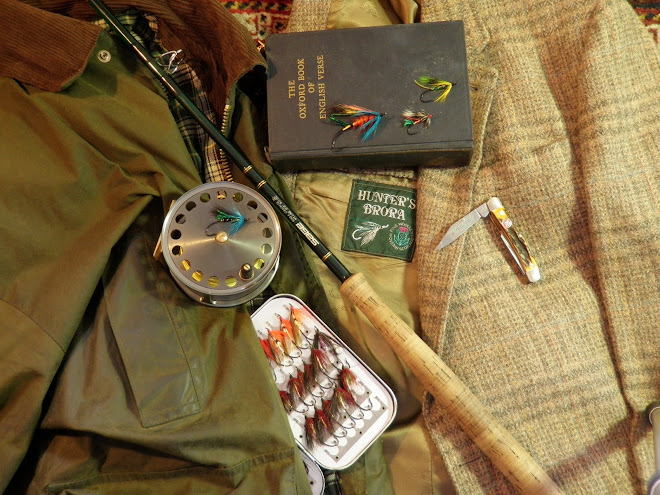
I am fortunate to have recently acquired a new hand-made cane rod by the master Joe Balestrieri. It is a modified Paul Young Princess taper, a 7' for a 4 wt with a wet fly tip and a dry fly tip. It has a lovely parabolic action that casts beautifully! I thought a little photo montage was in order with a few of my thoughts on the subject. Enjoy! Joe's rods can be found here: Redwing Fly Rods
Quotations Copyright 2015 Erik Helm 


A bamboo fly rod is unique, like a fine musical instrument. One must smell it, touch it, listen to it, and get to understand what it is in its essence. Only then when one casts in graceful symbiosis with the rod, will one make the most exquisite music.

Cane rods are like a fine wine. They are not intended to be consumed in quantity, but sipped and savored. The line rolls off the tip with the same personality as a wine rolls off the tongue and thus stimulates the taste buds. The shape of the line going out can be compared to the aftertaste of a wine, each having hidden aesthetics.

Plastic rods of the same model all look the same and cast the same. Imagine how boring the world would be if women were the same way.

There is something about a rod made from natural materials of bamboo, walnut, silk, and natural oils. The rod seems to have more depth, as one can look at it and almost see through to its soul. It has a richness and luster lacking in any materials made by man.

Art is not to be found in commodity. It is found in the personality of the maker which is infused into the finished product, of which he or she is proud, and almost doesn't want to let go of. Art comes in small and quiet places. It cannot exist where there is noise.

There is no other joy in angling as satisfying as when we catch a trout on a fly we tied, with a hand made rod, in a place where we had to find by ourselves, with our eyes and feet and mind.

If angling is the contemplative sport, as Mr. Walton would have us understand, that contemplation should not be on the final destination, but upon the path that led us there. Let that path not be the easy one nor the commonplace, but one of inner discovery and learning, for that much the better when the fish is finally brought to hand.

Scotch and bamboo rods should be well aged, and enjoyed together.

Let the fly that graces the end of your line not be an insult to the fish.

Each bamboo rod has a unique resonance, like a cello. It can be felt in the cast as the cello sings to Bach.

Don't fight a bamboo rod. After all, the bamboo is a grass, and all grass is impervious to wind. As the wind sings, the bamboo bends. reflect on a gentle breeze on a warm summer evening offering a coolness with a slowly rising and falling breath, and the rod will be yours to command.

Saturday, November 23, 2013

The joy of the cane fly rod


This past fall I acquired my first fly rod built of split cane. A 6’6” two-piece for a 4wt line. The model is a Redwing ‘Precise’ hand built by master craftsman Joe Balestrieri. Mr. Balestrieri is a true gentleman of many years acquaintance, and has been hinting and whispering to me of the possibilities inherent in bamboo for years.

He has a rather unique philosophy, namely that to follow the old master’s taper designs is like trying to recreate the Mona Lisa, and instead, by designing his own tapers, he finds discoveries that prove that the best cane rod is yet to be built.

Let me digress for a moment…

Having been involved in the fly-fishing ‘Industry’ for quite awhile now, I have seen, wiggled, cast, and fiddled with literally hundreds of split-cane rods. It is a weekly occurrence to have a customer come into the shop with an old stained rod sock and pull out a cane rod for evaluation. Many want to fish a legacy, as it used to belong to Grandpa, or they found it at a rummage sale for a song and now want it matched to a reel and line. Of the rods I have handled, 99% are rather awful. The reason why is simple.

Back in the days before the fiberglass and graphite revolution swept over the fly-fishing world, all rods were made of cane; the vast majority being mass-production rods. Yes, they were hand-crafted to an extent, but not by masters, instead, the were planed, glued, baked, and wrapped by the assembly-line process. They were heavy and not finely tapered and tuned. The analogy I like to use is a simple one when explaining this to students and customers: “Saying that you have a bamboo fly-rod is like saying that you have a metal car. All rods were built of cane, as all cars were made of metal. The differences between a utilitarian Ford, and a Ferrari are the same when comparing a South Bend from a local hardware store to a finely crafted Payne or Garrison.”

This is why cane rods have a bad reputation in modern days to the occasional angler. The run-of-the-mill rod is clunky, poorly tapered, heavy, and collapses on the cast when any distance is desired. Graphite is lighter, crisper, and recovers faster. Holders of this opinion are to be forgiven because they never have had the pleasure of casting a cane rod that is a true work of art.


The possibilities of cane opened up to me one evening when I paid a visit to Joe and his workshop. Always the gentleman, I was soon comfortably seated with a glass of Sicilian wine in my hand, and examining a restoration project Joe was undertaking on a short spey rod owned by some obscure Viscount in Great Britain. Balestrieri then pulled out a big 9 ft. 8 wt rod, and handed it to me to flex. Now I can be rather stubborn, and set in my opinions, but am wise and quick enough to recognize when my self-imposed blinders have been lifted off and the light of day revealed. What I held in my hand was an epiphany. It was as light as most graphite rods, with a fine parabolic taper and quick recovery. Unlike production rods of any material, no two handcrafted cane rods are precisely alike. The finish varies just a little, and the grain and knurls in the wood seats add a unique touch.

I sat speechless as Joe stood forth on the infinite possibilities of taper design. Perhaps it was the wine, but I could almost hear and smell the flowing water just beyond the tip of the rod.

Flexing it was like a finely tuned musical instrument with its own unique character not unlike a fine violin, both with inherent musical (casting) personalities and aesthetic charms. It had a presence not unlike a fine work of art. I was blown away. I left that evening after sampling a StrathSpey Single-Malt Scotch, and was a changed man.

That was a few years back. Now I regret the time in-between when I could have played the small streams of Wisconsin for bejeweled trout with an instrument that turned mere fly-fishing into a concerto for wood, water, and speckled wild quarry worthy of Mozart.

The first initial cast of the Redwing ‘Precise’ knocked me out. It felt like graphite, but yet not. It had power to spare, a sweet action that somehow seemed designed just for my stroke, it was beautiful, and it was the most accurate fly rod I had ever cast. I fell in love.

The initial outing with the rod was at the end of trout season on my local creek, which was totally brush choked. I fished with hopper patterns and baptized the rod with a lone 9” wild brown. Playing the fish with the flexible action of the rod was like listening to a symphony in stereo rather than mono: the experience just became more intimate. The short rod made negotiating the small spring creek much easier too, and the fly landed with the precision intended by Balestrieri’s artful hands. The pairing of an old 1950s Hardy Perfect 3 1/8” reel and a DT line made the rod come alive. It balanced like a dream. It disappeared in my hand as my casts just landed like I ‘thought them’ into place.

Laying awake one night before my annual trip to Idaho to fish for steelhead, I had an idea. Why not drive the extra fifty miles or so and spend the first day of two on the Selway River fishing wild cutthroat trout? Why not take the new cane rod? Why not have the proper experiences of sporting-restraint fishing dries with a tiny cane rod on a big western river?

That is just what I did. Yes, the little rod was limiting in some ways. I could comfortably put out 40 feet of line, and reach out to 55 feet or so when necessary, but it necessitated the stalking of some water, a cautious approach, and more thinking than casting, which is another of Joe Balestrieri’s little opinions. He believes that super powerful rods have limited the joy of skill and the hunt that the older more sympathetic cane rods made necessary. The thought, reflection, and the studying of the stream became with the new plastic rods, an art all but forgotten.


So I raise a glass of fine claret in salute to Joe Balestrieri the artist and craftsman, the rod he built for me, the joy of fishing with it, the feeling of a delightful coming together or symbiosis of aesthetics, power, and restraint: a tool worthy of the fish we pursue in beautiful places, and a rod that elevates the fly-fishing experience from the near mundane to the moving feelings of high-art.