Friday, November 10, 2017

An Ode to Old Fly Reels


Old Hardy Perfects and Orvis reels.
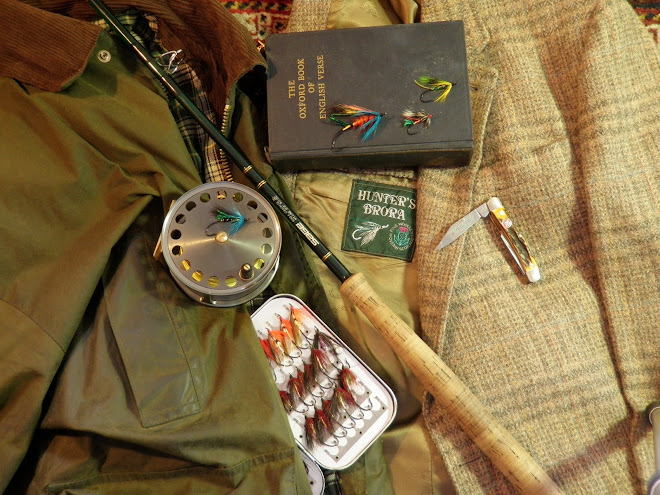
There is something about old reels that captivates me. Perhaps it is a sense of history; fishing them in honor of a time when things were hand-made by people who were passionate about their work and craft. Something that is hard to come by today outside the cottage craft movement. Skilled makers with years of experience toiled over these winches so that we could enjoy our time on the river with the best product they could produce. The craftsmen even placed a stamp in many cases on the inner surfaces identifying the maker.


To me this adds a sense of being involved in history. Where did these reels come from? Who owned them before me? Where did they get fished? How many stories could they tell if they could only talk?


There is a certain aesthetic in my mind’s eye as to what a fly-reel should look like: a classic look if you will. Early Hardy reels from England, older Orvis CFOs, even the ubiquitous Pfluger Medalist carries a certain ‘rightness’ to it.


Somewhere along the line the design of fly reels underwent a shift led by the look of technology, and today many reels look as if they were a part that fell off of a rocket ship, or a hubcap from a Ford Fairlane. The ‘newness’ factor became the primary selling point, as well as the drag setting that allowed the user to tighten down the check mechanism to the point where the reel broke off fish. Anodized finishes now come in red, blue, pink, and every color out there so that we can match our clothing with the reel.


For me, being a player in the endless timeline from the beginnings of fly-fishing and bringing a continuance to these old reels compliments the fishing itself like a fine wine brings a meal together. There is a story behind the wine, and the reels as well.


The CFO in the picture was owned by Lloyd ‘Frosty’ Stevens who fished Wisconsin’s Oconto, Wolf, and Peshtigo rivers back in the day. Frosty was from Waukesha, WI. The 3 5/8 Hardy Perfect is a pre-WW2 model owned by famous angler Andre’ Puyons who owned the Creative Sports fly shop in Walnut Creek California. The 3 3/8 Perfect is a unique reel as it was a special order having the agate line guard up, and was attached to the top of the rod instead of the bottom. Fascinating! The monster in the picture is a 1917 check 4 ½ inch Perfect used to balance large bamboo two-handed salmon rods. It came full circle from one owner to another back to my friend and then to me. The old Orvis Madison was made by Pfluger as an Orvis version of the Medalist reel. It also belonged to Frosty Stevens.


The care that went into these reels by their owners speaks to the pride they had in owning such equipment, for back in the day if you had a Pfluger reel, you were someone who was discerning. If you owned a Hardy reel, you owned the best there was.


They were the best, and I would argue they still are. Any reel that has all metal parts and can survive 70-100 years of use speaks volumes to the timeless designs and the craftsmen who meticulously made them.


A simple comparison that can be used is to fine rifles. Modern black plastic stocked bolt actions with stainless actions are more weather proof and durable than old rifles, but there is an undeniable aesthetic to rich wood and fine bluing, hand fitting and checkering.


Some may call these old reels and sporting ephemera ‘collectables.’ I say use them. Museums are located behind locked doors. Let them breath and get wet and full of fishy smells. Let the old ratchets sing again.


Thursday, November 9, 2017

Scales…. Of difficulty


“If God had intended us to weigh trout, he would have given them bigger scales."  Don Zahner


I had a conversation with another trout angler the other day, when he asked me “What is the biggest trout you have ever caught?” I am a little too sly and old to be drawn into this ego trap, so I answered “10 inches.” He looked at me strange, and walked away to refresh his barley pop.


Of course I was being facetious, but as I thought later about memorable fish this year, it seemed that many of the bigger fish were left out of the trip down memory road, and instead I seemed to value fish I had worked for with a special presentation, an amazing cast, or….? Foremost may be a ten inch brown that took a grass hopper cast with little back-cast room at fifty feet and requiring the fly to ride down a 6” slot and kiss the left side of a boulder to put it under a clump of grass. When the little brown ate the fly, my friend exclaimed” Wow! You earned that fish!”


How do we measure success? Or should we? Is it measured in size, quantity, or happiness? Can that happiness come from a small fish caught a certain way? The questions and the philosophy filled my head as I hiked the coulee hills near my home and finally emerged accompanied by a cheap merlot, (it was a good Monday) and some jazz later in the evening.


See, the comeback to that anglers question should have been “What is the most beers you have drank?” and then “Now, what is the best beer you have ever had?” Provokes thought doesn’t it?


Satisfaction does not always equal large or many, and neither skill. A sip of a vintage wine may be more memorable than the college party when you drank all that punch, strapped a bra to your head and ran naked into the dean’s swimming pool… or maybe not…. Bad example.


Degrees of difficulty may be like a fine wine that makes the dinner come together. You figured it out. You delivered the perfect cast. You beat the wind, tied the perfect fly, figured out the hatch, etc. You solved the little problems on the stream.


Size does not necessarily equate skill as one angler figured out after he returned from a big western tail-water full of pictures and stories of 20” browns and rainbows, only to get skunked in a spring creek ten minutes from my home. This is why some of the most popular destinations in fly-fishing involve a simple equation: Where can one take a person who can’t cast or read water, and get them into a big fish? (or even a fish at all!)


Aha… are the lights going on yet? How many pictures of enormous rotting Midwest salmon do we have to look at before we realize size is relative? They don’t count you say? Well… they did for the guy who caught them…. Which is fine too. We all have to start somewhere.


However, there inevitably comes a point when we perform a miracle on the stream, and are rewarded with what we consider the booby prize: a small fish.


I think it is the effort and the skill that are their own reward. Satisfaction and difficulty are inherently related.


So don’t get down in the dumps when some fumble klutz bounces a wooly bugger off the back of their head and somehow hooks the biggest trout you have ever seen. That 6” trout you took with an unweighted nymph fished upstream without a strike indicator has it beat.


Just don’t get it mounted…..


Monday, November 6, 2017

Depression and Blue-Winged Olives


Depression and Blue-Winged Olives

"In the depth of winter, I finally learned that within me there lay an invincible summer." Albert Camus


They have a name for it now…. Seasonal Affective Disorder or S.A.D.

Caused by a lack of light and cold temperatures, it infected me one dark October morning as the trout season was coming to a close. The day before was sunny and seasonal, and the colors of fall were in full glory; the trees on the hills painting the sky with a rich palette of vibrant reds, yellows, greens, and oranges. This day I awoke to fog, rain, cold, and a monochrome melancholy. Everything was gray, especially my mood, as I pulled back the covers and slept in. I had vowed to fish out every day of the season as it waned, but sometimes psychology gets in the way. I finally pulled myself together and got out of bed to face the day, shivering as I fumbled with the coffee maker. Cold gray weather makes me want to cover myself in sweaters and enter into an introspective gloom of reflection. I putzed and delayed the fishing while curled into a ball eating soup and reading Joyce since I had misplaced my Camus. Thus went the morning and early afternoon.


After warming up enough to begin to crawl out of my moodiness and staring outside at the dripping wet cold that was trying to get at me through the window, I knew I had to get active. Before the opportunity left me, I grabbed my fly rod and bag and hopped into the car for the five-minute drive to the trout stream. That’s right… five minutes. This depression was so foul it prevented a journey I could complete on a tricycle. The fishing and the creek were right there, all I had to do was stop listening to dark Russian music long enough to hear the murmur and trickle of moving water.


The drizzle was penetrating my gear and soaking my hat even as I suited up at the stream. I considered going home and going back to bed, or driving to the local stop and rob for a large bottle of wine to drown my mood even further. I decided my whine deserved no wine until the trout were caught and my feet were tired from stumbling over rocks. Hard work and exercise would chase the blues away! Sometimes we can trick ourselves with delusions, and sometimes reality can penetrate our souls like the fog that surrounded me. But what was that? The trout were rising! They were eating something off the surface of the water; something so invisible in the near opaque mists and drizzle that I knew instinctively what was going on. I remembered the old adage: The worse the weather, the better the olive hatch. The Blue-winged olive is a small mayfly that matches the gloom in shades of olives and dun gray blues. Its idea of a good time to hatch usually is accompanied by clouds, snowflakes and the London weather of Dickens I was in now. It probably is camouflage to prevent the little winged creatures from being eaten in mass by birds, for even a sharp sighted swallow couldn’t see through this mess.


The Blue-winged olive is so picky about the weather, that a single ray of sunshine can shut down a hatch, and a lone dark cloud passing over can trigger an emergence. The lower the barometer, the happier they are. I wondered if Blue-winged olives read Camus or listened to Pink Floyd naked in a dark room. Those thoughts still stuck halfway in the morning’s depression ended as I tied on a little CDC winged pattern in a size 18 and went to work. This creek is small, and has few large fish. A foot long brown trout is a treasure here. Well… they were lined up in channels and ate my imitation with gusto. I tried to make progress up the stream, but I got slowed down by catching fish! Good problems to have. I landed a beauty of a brown wearing his fall-colored wardrobe as bright as the day before had been, and a smile came over my face. Nature is funny sometimes, and perhaps the best place to look for a cure for anything is close to the source of the cause. The very weather that shrouded my happiness in wet-blankets provided the medicine in the form of a tiny mayfly bonbon. Even though thunder began to rumble over the Coulee hills, signaling a retreat from the stream, it seemed to me it was brighter… perhaps inside me rather than outside.


Blue winged olives must possess nature’s degree in psychiatry, for they can sure chase their own colors right out of the soul of a fly-angler.


Tuesday, October 24, 2017

Coming Home


Connections….

They define us, they bind us to our inter-relationships, they flow and ebb, break and reconnect our concepts of identity. They are everywhere, but only if we look for them.

 Thus it was a connection I sought on Wisconsin’s Bois Brule’ river. Although the desired connection was a bright one with a wild steelhead, one sometimes seemingly as elusive as a unicorn, there would be another connection that, when the dust had settled, became more important.

 Our journeys as anglers are never straight paths. We seem to stray or explore different approaches and desired outcomes in our progress on the water. Thank god for that, for as one old friend reminded me, “Exploring paths in the journey along life’s road allows us to take side-steps and wind and turn throughout the one-way trip, thus adding miles and miles to what otherwise might be a straight, quick journey to the inevitable end.”

 As I get older, I am slowing down, and the explorations and approach, the history and lore seem as important, or sometimes even more interesting than the fishing itself.

So I drove up to the river with a wagon full of cane rods and hand-tied flies inspired by antique Scottish patterns fished on the Dee and the Don. The main rod was going to be a restored and newly cut and spliced Sharps of Aberdeen two-hander. It started out as a sweet rod several years ago, but after getting the ferules stuck together rather permanently, it got chopped and spliced to @ 10 ½ feet. Finding a line for it was a nightmare, as I sorted through my huge box of spey lines, for it started out moderately soft, but as I taped it up, realized that now it resembled a Frankenstein monster, cobbled together and chopped and sort of stiff moving, much like Boris Karloff’s flat-topped rendition. I drove to the local muddy canoe landing on the Kickapoo river and fitted it up with a 4 ½” wide-drum Hardy Perfect reel from 1917. To make a long story short, it was like casting a broom stick. I finally put on an old 10/11 weight salmon line and was able to make it work…. Sort of.

 Stubbornness runs in our family, and I got a double dose of it. That is the only explanation why the rod didn’t get left at home. “I can make it work,” I justified to myself weakly and often to reinforce the error.

 The weather was remarkably warm and beautiful when I arrived ahead of our party and settled in for lunch and coffee, dreaming of the river while I sipped and waited for Barry, who would accompany my foolishness.

 Steelhead are often a beat down. Not necessarily physically, but mentally. Bright cheery and eager faces entering the water at first light can often leave it after a fishless day not speaking to anyone, full-of self-doubt, self-loathing, and completely lacking in the confidence that was over-flowing in the morning. Everything gets the blame; Tackle, the sun, the water clarity, leaves in the water, the choice of flies, and our selection of aftershave. The truth is that confidence is the most important part of the game, and it is all mental and as fragile as a newborn despite our best intentions and egos. I have fished for steelhead all over North America for years and years on storied rivers. One would think I was used to this, but when Barry picked my pocket by landing his first Brule’ steelhead behind me in the second run we fished, I started to experience the downward spiral into self-questioning, misery and defeatism that we call steelheading. His fish was a stunner. Wild as the weather on Lake Superior and chrome. Translucent fins too. All that was missing were sea-lice. Here was the McCloud strain from California’s tributary to the Sacramento River, and extinct there. Transplanted along with rainbows and stocked in the tributaries to Lake Superior, they were all wild fish now, a rarity in the world of anadromous fish. Thus the happy congratulations and high-five we give each other often decays as we want a fish too…. And the mental beat down begins in proportion to the beauty and rarity of the fish.

 I stuck with the Frankenstein rod, making it work through stubborn will and body strength until in the morning of the second day, we screwed up, and took the wrong path for the morning fishing. This led to poor water and crowds and a path which we stubbornly followed with hope that things would improve and we would find better water and less anglers (who seemed to appear out of nowhere as soon as we set our feet in the water). The path started to give out as we continued downstream, and we had to crawl and climb through the beaver-falls and clay banks, rods snagging on pines stub branches, our clothing covered with brambles.

 We spent five hours hiking through the forest tangle, fishing here and there and swinging flies for a few casts until the water petered out, only to find ourselves back at the next parking area downstream where the other two anglers in our crew had put in. We walked back to the car soaked in sweat, dehydrated and pissed off, and when the rest of the gang met up with us for lunch in the parking lot, found that they had success, and Lem had hooked and landed his first Brule’ fish literally on his first morning on the river ever. The mental beatdown was now riding on my shoulder like a chattering monkey. “You suck,” it kept blathering endlessly.

 I kept with the monster rod throughout the rest of the day, but the physical exhaustion and muscle fatigue and doubt combined to make me take it apart and put it away before nearly passing out. Both Barry and I skipped the big party on the river we were invited to, and silently ate dinner after visiting three restaurants just to find a single available table. Back at the motel we knew we had to come up with a plan to beat the crowds. It seemed that half of Wisconsin and Minnesota showed up that evening for the weekend fishing. We had to have a plan. Well, the plan just sort of developed all by itself. By going to bed early, we awoke early and refreshed, and opening the motel door to the cool air of false dawn light, found that the parking lot was still full of cars. Everyone had slept in.

 We hoofed it into waders, choked down a doughnut and coffee or tea, and drove like the devil for the stretch of river I chose for the morning fishing. There were only two cars in the lot ahead of us, so we geared up by aid of headlamp and chanced it.

 Here is where the connection begins. I reached for a single-hand bamboo rod, and took it out of its case. A restored Clifford Constable 9’ six-weight restored by my friend Joe Balestrieri, and matched by a Hardy Perfect reel of 3 5/8 inches; a special reel, but more on that later. I tied on the new fly that, get this, I had not fished yet, lacking in confidence.

 Sometimes things come together in just the right way to make the connection. I noticed right away that I was fishing better as the light began to increase and the water chilled my legs. My swing was in zen mode, the little corrections to fly speed just happening as I didn’t struggle to fight the gear. Before the light was fully on the water, my fly was intercepted with authority. I had hooked my second Brule’ steelhead, the one last year having coming unpinned due to user (or loser) error.

 The bonus was some drama. The steelhead moved back and forth in the run, with me not trying to place too much pressure on it and screw it up. Then as Barry watched, it exited the pool and the reel began to sing and screech and protest the sweet music of an old Hardy. The run ended with a sharp left-turn of 90 degrees and a rapids which as I followed, my fish took my line into the tree branches at the bend, to be saved by Barry, alert as always.

 By now I was convinced I was not gong to land the fish. There was another 100 yards of rapids to go, but all of a sudden, the reel stopped screaming, and the fish buried itself in a soft pocket of water in the middle of the maelstrom. I spotted a small sand bar under water to the side, and a landing plan was put together. Maximum strain was placed on the rod turned upside down to equalize tension and strain on the bamboo, and the fish was landed. A sweet buck with a small bit of rose flank for color. The beat down had ended. I was staggering around in relief and joy when it hit me. The reel was owned previously by the late Andre’ Puyons, angling legend, former president of Trout Unlimited, prolific teacher and tyer with ever-present pipe and Irish hat and co-owner of Creative Sports, a fly-shop in Walnut Creek, Northern California. Walnut Creek is just west of San Francisco, gateway to the Sacramento and its now land-locked tributary the McCloud River. My reel most likely fished the McCloud back in the day in the hands of Andre’ Puyons.

The fish I landed was a ghost, an anachronism not out of time but out of place and now in last refuge from extinction. We all got tangled up and met in a connection on Wisconsin’s Brule’ river. I could almost smell the pipe smoke. The reel had come home. Old Andre’ was looking down and cracking a wry smile from somewhere beyond the pines and the mists of the river. I felt it. God, I dig this sport.


They say you can never come home again. I disagree. The time and place might be a little different, the circumstances connected with crooked lines of geography and chance, but if one closes one’s eyes, we can see it, it is all around us. We are always home through the connections that entangle us.

Tuesday, July 11, 2017

The Dream....

 It is official. I have resigned my position at Orvis, and will be moving to the driftless area of South West Wisconsin, a unique geological area full of spring creek trout streams. I will be starting a fly-fishing school featuring 2-day schools, Trout master classes, Casting instruction for all levels, and a guiding service. I am both excited and a bit scared... Muhammed Ali, one of my heros once said that if your dreams don't scare you, they are not big enough.... Dream big, and have confidence! To all my friends,... When I get settled, I will have a glass of claret waiting for you, some jazz from my collection, classical too, and some unique historic rods to cast at my new driftless fly-fishing home and Erik Helm's Classical Angler fly-fishing schools and guide service. Come visit me. I will wax poetic. Many have begged me to teach and guide, but due to my job, I could not be independent. Now the sky is the limit, and I hope some of my 3,000 plus former students show up for what could be described as Erik Helm's Opus. (nod to Mr. Holland (film)).
Here I will be. Soldiers Grove, WI. Cheers, and wish me luck! 414-331-9102 Erik.helm1@gmail.com
Erik Helm


Lots more to come including new essays, articles, a book, and the sky is the limit.... Help me out by spreading the word, and love to everyone!

Tuesday, November 29, 2016

The Hidden Run


As I approached the river and turned my car slowly down the winding access road, my sense of anxiety grew. Would there be anyone in my hidden secret run? Would anyone trespass on my last privacy on the water? I was relieved to see the opening through the bushes marking the way to the river unguarded by another car, and carefully nosed mine into the nearby scrub a hundred yards short of the access point. I retrieved the magnetic sign I had made and attached it to the side of my car. ‘Biohazard! Feces collection and vector study vehicle’ it read. That should keep people away! I hopped into my waders and ran for the opening before anyone could spot me, dropping toy rubber rattlesnakes and spiders as I went. I would rig up the rod later on the river. Less time for somebody to spot me by the road and find my hidden run: my only sanctuary.

Then I woke up from the dream….

 For that is the irony… The hidden run does not exist. At least as much as it is truly hidden. It is there for all to see and is not secret, it only lies obscured by the lack of ability in reading water and breaking with common convention. Later that day I pulled into the hidden run. There were people walking their dogs on the road, and anglers driving past to other destinations on the river. Even if they found my hidden run, it would still be hidden for they would not fish it.

Why not?

On our tributaries to the Great Lakes and especially my local river, fly anglers pursue anadromous fish such as Steelhead and large Brown Trout the same way they pursue the salmon, that is in general one of two methods is used. The first is sight-fishing: find a fish spawning and fish to it until you catch it, frighten it off, or foul-hook it. The second method is even more productive. Dams and waterfalls have a habit of slowing the progress of fish up the river to spawn. Often they pool up or congregate the fish for several hours and even days. In some instances, the obstacle is too difficult or high to jump over at all, and the fish reach an existential and real dead end right there. Here is a good spot for lots of good catching. Note I didn’t say good fishing, that might be something different if we are sport fishing and not gathering for subsistence. Both of these methods place many fish on the end of an angler’s line, so they are the most productive method, if not questionable in a sporting sense. In this case, what is productive and common convention does one other thing: it prevents our metaphorical ‘Hidden Run’ from ever being discovered by the madding crowds.

Why? Because there are no waterfalls or dams, and only the top head of the pool may have the occasional odd salmon struggling to spawn with its back half out of the water. Beyond those obvious signals and signs, the water is a confusing tumble of boulders, riffles, pools, slack water and fast shoots. In other words, it needs interpretation or reading, it takes analysis. It takes more effort to find fish in holding water than to just shoot deer in a petting zoo. Opening that page opens the world’s longest book. A book and a study so rich with promise and eye-opening that hidden runs are suddenly everywhere, and this is the second irony, the hidden run both does not exist unless it remains hidden by lack of wisdom, and it exists everywhere afterwards when that knowledge is gained and placed into practice.

Still reading?

Lets give a few examples. In spring when the water is high on our tributaries, anglers walk the banks and almost always ask each other the same question like a ritual: “Have you seen any fish?” Last year I had a nice conversation with another angler in a parking lot while rigging my gear. He went down to a shallow riffle, wandered around the water looking down and peering for twenty minutes or so, and then left. I started working a sweet piece of water that fishes best when the river is high and clear. Twenty casts later, I hooked a screamer of a steelhead in the boulders at the tail out. The other angler had been within 50 yards of this water, but instead of unlocking the possibilities, began putting into operation the common convention of looking for fish. Then this spring two anglers were walking down the river in this very spot, actually walking through the good water when one of them recognized me and asked if they were in good water. “Is this featureless water O.K. too?” they asked. I looked at the run with a hidden Rosetta-Stone of little clues as to boulders and pockets, scallops and spits and told them that indeed they were in good water. Then after they left ten minutes later, I proceeded down the run and briefly hooked a fish exactly where they were standing.

Trout too:

The same quagmire of convention and ease of path taken also happens on trout streams to all our detriment. Often trout anglers concentrate their efforts of two distinct things in the water. LUNKER structures or artificial undercut banks providing cover, and riffles at the head of pools. Smart anglers too, for the riffle is a hatch factory providing broken water and cover, and the LUNKER structure holds the majority of fish in a given pool in most situations. However there are a lot of other targets out there. Fishing to a rising fish with a dry in the true English style will tell us where the fish intercept the bugs, but what about when they don’t? Do we pass by the log sunk in the side of the tail-out for the obvious ten-incher rising in the riffle above, or… would it be a good time to explore that water with our fly? If we never depart from our common path, we may never find new avenues of discovery and knowledge, and yes… pleasure. But that might mean taking that strike-indicator and bead head nymph that has been glued to our line for the last ten years, and placing on a Sawyer style lightly weighted nymph and working it actively and with thought and planning. On my local trout stream I have meet some great anglers, some characters, and everything in-between. Once during a hatch of mixed Hendricksons and March Browns, I came across two guys who were fishing prince-nymphs downstream on a dead-drift. They were working down the stream as I was working up. I greeted them politely, they told me they had not hooked anything yet, and I asked them if they had any mayfly imitations around a size 12. Nope, they both always have used size 12 prince nymphs with a split-shot or two. They continued on their way shackled by their own convention. The hidden run that day was all around in the air, and had wings.

If we walk the same path everyday we see the same scenery, only differently in hues, never a different view entirely, and if we follow the hatchery truck, always fish the same 3 flies, or ask everyone else what they do so we can ‘bah’ like sheep in the same language, the hidden run will remain locked tight. We have to get away from the dams and waterfalls, and think beyond the riffles.

Being skunked is part of the process of learning the keys to opening those doors to the hidden run, as is stubbing one’s toe or getting lost.


So what is the lesson or the take-away? Perhaps it is simply that by taking the path that leads to the initial success of fish caught consistently, and not breaking with that tradition at some point in our progression, we have taken a short cut to a closed book and a dark forest. In order to find the path again, we may need to go fishing and not worry about the catching. Then the discoveries amongst the little riffles and eddies may lead us to the hidden runs and the spaces between the notes where the music is sweetest. The funny part is that it has been there all along, but how fragrant is the flower when finally uncovered. Asking about the secret spot may bring answers, but finding one’s own will bring fulfillment.
The door is right there, and there is no footpath…. Just look out for my rubber rattlesnakes!

Tuesday, October 25, 2016

The Paper Route... first job

This is not fly-fishing related, but I wanted to share this on my blog as it is humorous and easy to read and funny.... Please enjoy this!


When I was 12 years old, I got a paper route delivering the Milwaukee Journal to our neighborhood. My parents must have thought it might build character and teach responsibility. I wanted the route anyway, as my best friend Alex had one already, allowing him to buy more baseball cards than I could. Dad and Mom both encouraged me that employment would be fun, and told me stories of the jobs they had as youngsters, most of which started out with “When I was your age, I had three jobs that blah… blah.”

My dad accompanied me to the newspaper station for our area, and I signed up. My route would include two blocks of Downer and two blocks of Stowell Ave.

The way the system worked was that I would be charged by the week for how many papers I ordered. I would then collect the money from the residents, and any money that was left over after paying for the papers was profit. Essentially, we kids were private contractors.

We carriers received a huge yellow bag constructed of canvas designed to be worn over the shoulder. The Journal consisted of a daily addition, a midweek addition with advertising supplement, and a Sunday edition.

 The guy in charge of the local routes worked out of a shack next to a convenience store. He was a fat and disheveled guy in his 30s with greasy balding hair who probably saw his future differently than it now was. He compensated for his pathetic life by acting like the malevolent head of the carrier gang. He assigned the routes and determined the amount of papers you would receive and pay for, so getting on his bad side often meant that you would find yourself trying in vain to sell your extras by standing on the corner yelling “Paper” to passing motorists.  Many of the carriers hung out at the shack, trading insults and baseball cards. They were the bigger and older carriers, and none of us little kids were allowed to hang out with them. Summoned to meet with the ‘boss’, one would have to make his way slowly past the snickering carrier gang who added their snide comments as you meekly awaited his audience. When I first was assigned the route, the ‘boss’ told me that I would be taking over from a girl named Beth. She would show me the collection cards and take me on the route with her on her last day as an orientation. “You will really like her” he said, “She is a real cutie.” I called her and we arranged a meeting. When she set eyes on me she cried “Eww, it’s you!”, and walked off leaving the collection cards on the grass. That was the extent of my orientation. She knew me from school, and since she was a popular girl, and I was a popular target, she had reacted as child-society demanded.

 I was supposed to be able to have a job I could do after school, earn money to be put away for savings, and learn responsibility. Instead, I and increasingly my parents became enslaved by it.

 The daily additions were easy enough. One simply placed as many as one could carry at one time into the big yellow bag, and staggered off to fight the defective screen doors, viscous dogs, bullies, lonely elderly residents with dementia, and other hazards of the job. When I ran out of papers, I went home for more until the whole route was complete. I repeated this for seven days a week, 365 days a year. There were no vacations as a paper carrier. You might get a friend to cover for you in an emergency, but then you faced the consequences if your friend was less than attentive and forgot to deliver to half the houses, instead choosing to read comic books.

 I soon found out that the oft-portrayed icon of the young child on a red balloon tire bike, with a bag full of papers, dutifully delivering the daily news was a myth. Trying to ride my bike with the cumbersome yellow bag was nearly impossible. I would have to lean the bike over 45 degrees in order to balance the load. Pedaling at this angle proved futile. One solution I came up with was to hang the bag off the front handlebars of the bike. This worked as long as you didn’t have to steer or stop. Having to stop the bike at every house and get off to deliver the paper wasted time as well.

Now some carriers had mastered the art of folding the paper in a certain manner in order to toss it onto a porch while continuing to ride by on the bike. My experiments with this ended up with papers in bushes, a broken window, and spending hours chasing blowing pages down the street when they sort of exploded as they were halfway to their destination. I finally was able to master this folding with practice, but it was only practical one or two days a week, as the other days the papers were too thick to fold.

Of course, my dumb bike was not exactly up to par either. A neighbor had given us a black Huffy 3 speed from the 1940s with two of the three gears stripped. It must have weighed over 50 pounds, and had survived a collision with a car. In a feat of inspiration bordering on the lunatic, I spray-painted it day-glo orange, trying to make it look like the expensive road bikes at the local bicycle store. It ended up looking like a cheap science fiction movie prop.

 I finally abandoned the bike idea and instead used a rusted toy wagon with no handle, which I pulled with a length of old rope I had attached. I don’t remember where the dilapidated wagon was obtained from, but it must have made me look like the Oliver Twist of newsboys.

After a short period, the wagon must have finally fallen apart, and I moved on to the use of an abandoned shopping cart. Now this was the way to go! I could carry most or all of the papers in one shot. The problem with the shopping cart is that it had one of those funny wheels that one can only find on shopping carts: a sort of free-spirit wheel that always wanted to go its own way. I would make progress down the street, only to suddenly lurch into a tree or a curb.

 All these trials could be tolerated and overcome if it wasn’t for the dreaded Sunday edition. Instead of being an evening paper like it was on weekdays and Saturday, the Journal on Sunday was a morning paper. I rose every Sunday to the alarm at 4:30 am, and complete darkness. With bleary eyes, I dragged myself down the stairs and to the curb, where unbelievably large and heavy piles of bundled papers had been deposited. In the pre-dawn silence I half carried, rolled, and shoved the bundles up to our house.

The Sunday paper was unique in that not only was it ten times the size of a daily paper, but it also had to be assembled by the carrier. First, I had to cut the bailing wire that bound the stacks of papers together. Unlike my fellow carriers, I didn’t have my own wire cutters, but had to borrow Dad’s, promising each time that I would put it back properly in its slot on the peg-board above his workbench. The bailing wire had a habit of being twisted too tight, thus ruining the first and last paper in the bundle. I then had to sort the sections one by one into complete papers while sneaking a read of the comic strips, all under the dim 40-watt bulb in the overhead hall light. (We wouldn’t want to waste electricity, right Dad?)

Once assembled, the papers would be piled ten at a time into my big yellow bag, and I would stagger off into the darkness, leaning and lurching with the weight. Once rid of my load, I would return home to get another ten papers etc., until the route was complete. I think I had over eighty houses, so that more than eight trips would be needed. As soon as I got halfway through the first block my body reacted to the shock of being awake by letting me know I had to go to the toilet. When this happened, I hid the papers in the bushes, and ran bow-legged for home.

It was bad enough in normal conditions for a 12-year-old boy to carry 70 pounds of papers eight times through the neighborhood, but when the weather acted up, it could really get tricky. One of the worst things about rain or snow was that as the papers inevitably became moist or wet, they gained weight until you felt like you were delivering bowling balls.

Several Sundays saw the neighborhood covered in newly fallen snow a foot or two deep. At this point, the shopping cart and bag were abandoned in favor of my sled. Mom and I duly dragged the sled through the snow, piled full of papers and covered by garbage bags against the weather. It was early in the morning, so the walkways were not yet shoveled, making every house an Alaskan expedition. It also was hard to move when you were wearing three or four layers of clothing, two coats, and covered in snow.

Some of the residents, accustomed to reading their paper at a certain hour were intolerant of delays. They would stand in fuzzy slippers and a robe, holding steaming cups of coffee just inside their cozy doorways, and watch me trudge through waist deep snowdrifts trying to make it to their door.

On one of these arctic adventures, my mom was pulling the sled when it toppled over. She slipped in trying to catch it and lay on the street calling out in pain. What a way for Mom to spend her day off.

I did get Dad out of bed to help me once, but he complained so much, and made me so miserable that it was easier to do without his help.

Nobody at the Journal had warned us that the whole family would have to get involved. They also could have warned us that the filthy little rag-a-muffins selling papers in the movies were filthy because they were covered in newsprint! Not a day passed when I didn’t come home from the route badly in need of a bath. They also could have mentioned that continued use of the heavy news-bag would cause curvature of the spine. For years during and after my paper route I habitually walked with a conspicuous tilt, and always had to be stopped during school scoliosis tests and gawked at by the nurses. All this for less than twenty dollars profit per week.

One of the most interesting things about my paper route were the residents themselves. Our neighborhood was full of eccentrics.

There was the old woman with memory problems that lived in a huge home filled with antiques. She was forever misplacing her checkbook, and always wanted to offer me booze when it was cold. She needed help to fill out the check, and I was often there for an hour or more, helping her locate the checkbook or her purse (was it in the freezer or the closet?), and trying to politely refuse endless offers of brandy. (I was twelve at the time.)

There was the control freak that insisted on balancing his accounts and his checkbook in front of me while I waited to be paid, the lawyer who waited outside in his bath robe for the paper in winter while drinking a beer, a kind old woman with a little dog named ‘Jasu’, a psychiatrist who always tried to tell me what to do, and several people who always answered the door acting as if they were expecting the cops. Several residents I never saw at all. Their papers mysteriously disappeared from the doorstep of their homes as if by magic.

Most everybody was friendly until collection time.

 
I wonder who came up with the idea of sending twelve-year-old kids to people’s doors to collect on debts. Isn’t this a thing best left to big guys in leather jackets named ‘Lefty’? I certainly was not what one could expect in the enforcer category. After all, I was only twelve, and weighed less than 75 pounds. I certainly was not the best businessman, and was intimidated by some of the residents as well as being lazy, so often the amounts owed included several weeks or even months of delivery. At collection time, few of the residents actually had money in the house, or their spouse had their checkbook. Perhaps I could come back later or on Saturday? I wasted an incredible amount of time trying to find residents who were actually at home and had money to pay the bill.

I received lectures from the residents to collect more often, and to that effect went out at night to knock on doors to see if I could catch people at home.

It’s funny how the tune changes sometimes. The same people who lectured me on collecting more frequently happened to live in houses that suffered mysterious electrical lighting failures as soon as I rang the door buzzer.

I had an effective way of dealing with these customers. When it came time to deliver the Sunday paper, I would open the outer screen door, and trap the paper at head height between the doors by quickly shutting the outer door. When the customer opened the inner door, he was greeted with a shower of pages onto his feet.

Of course some customers never paid, and were duly reported to the Journal for collections. I never did get my books balanced perfectly, and left the route still being owed money.

 
I saved just about everything I made on the route not because I was thrifty, but because my parents had enforced it. I obtained a savings account at the University Credit Union when I was about ten, and most all of the money I made selling greeting cards or on the paper rout went into it. I paid for half of the cost of my trumpet, and the entire cost of a later competition target rifle. I may have missed the thrill of squandering my earnings on candy and comic books, but I did learn to save. I also learned a lot about life, the people that inhabit it, and all the trials and tribulations of earning a buck the hard way.